> For the complete documentation index, see [llms.txt](https://docs.emblem.wiki/llms.txt). Markdown versions of documentation pages are available by appending `.md` to page URLs; this page is available as [Markdown](https://docs.emblem.wiki/emblem-developer-platform/general-information.md).
# General Information
Founded January 2026
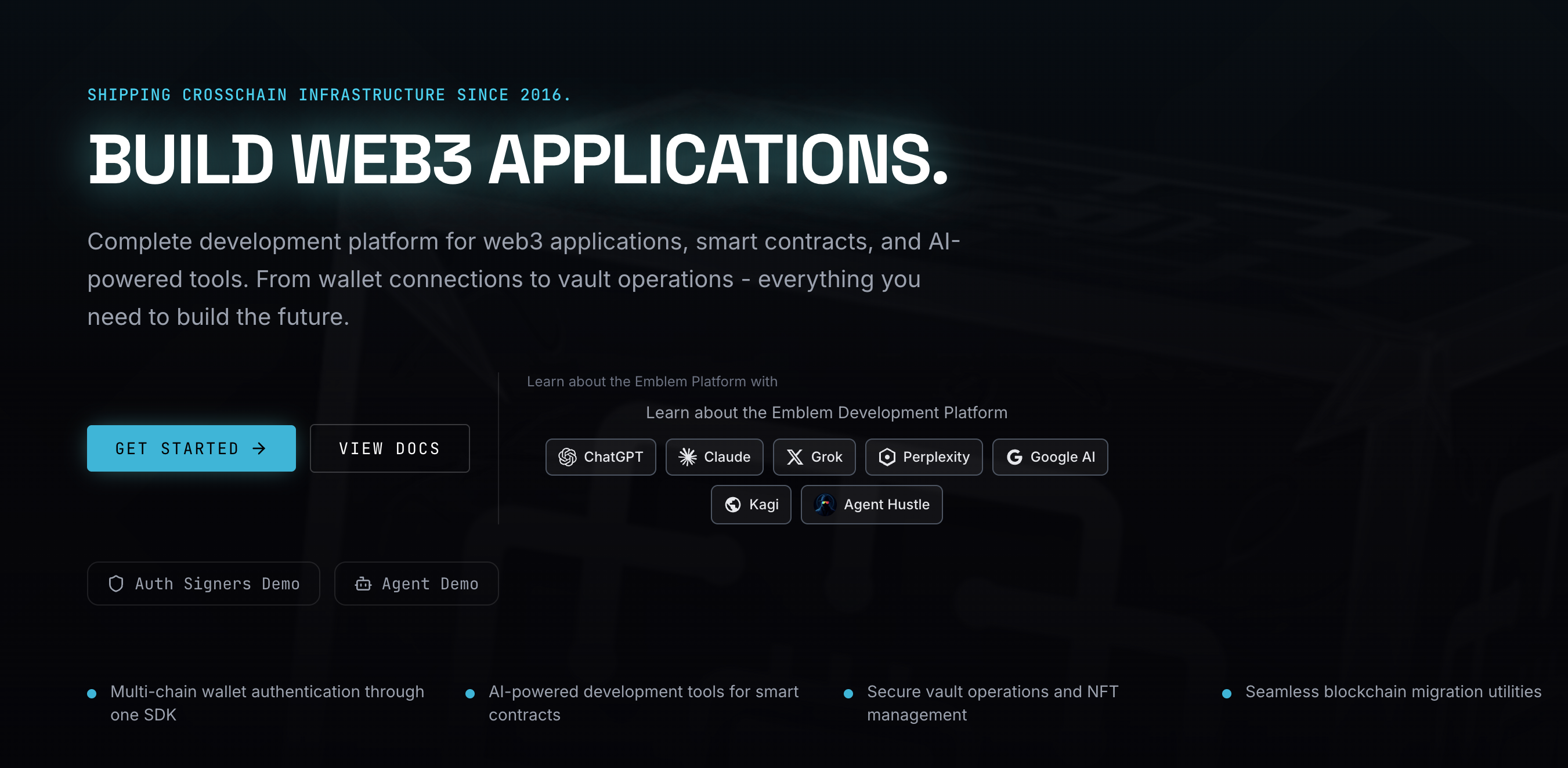
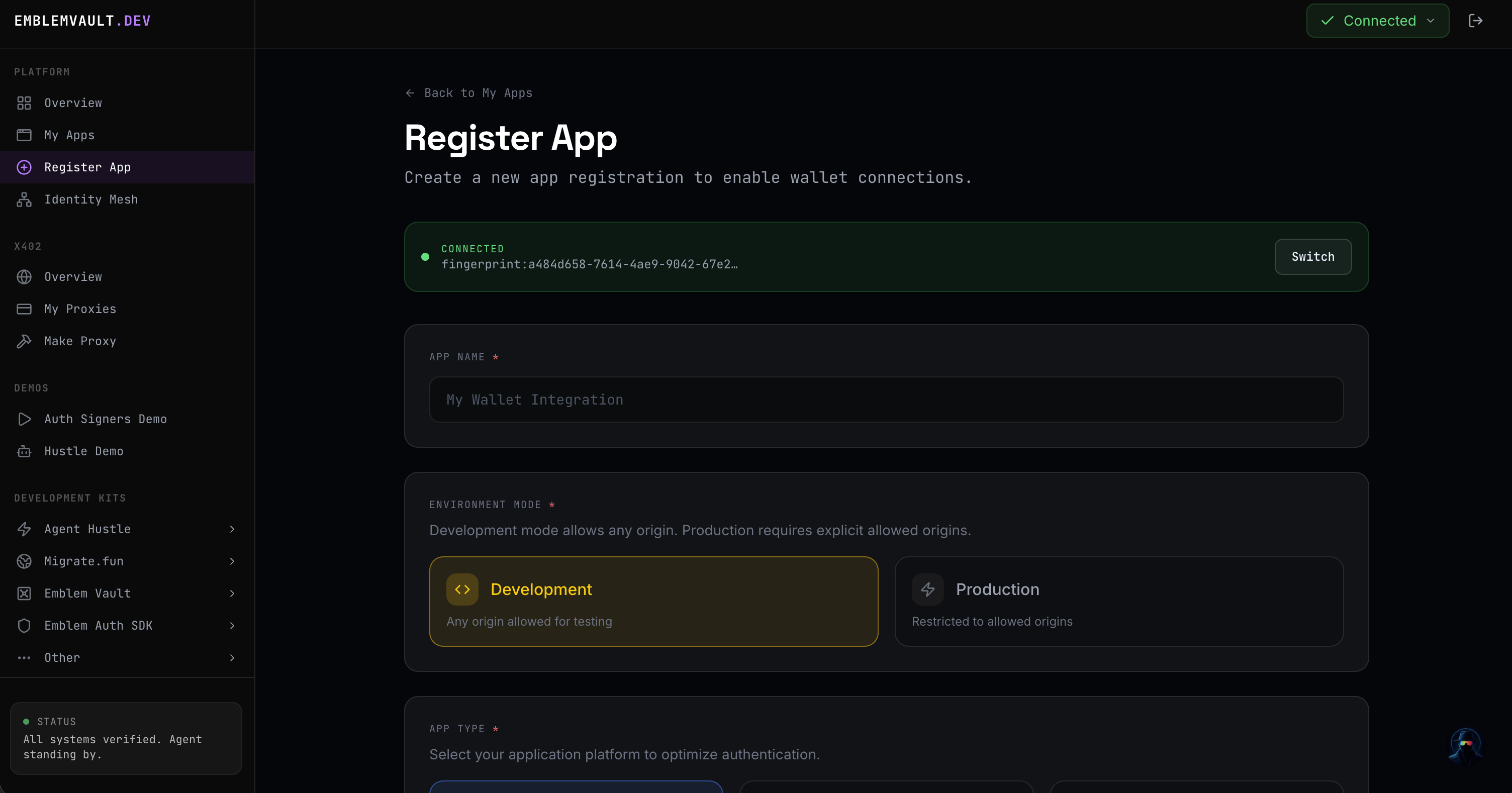
The **Emblem Development Platform** (accessible at [https://emblemvault.dev](https://emblemvault.dev/?referrer=grok.com)) is a developer-focused suite of tools and SDKs designed to simplify and accelerate **web3** and blockchain application development. It emphasizes unified, multi-chain solutions for common pain points like wallet authentication, secure asset management, smart contract creation, and cross-chain operations, reducing fragmentation in the web3 ecosystem.
#### Core Purpose and Value
The platform aims to streamline web3 workflows by offering consistent tools across blockchains, enhancing security, and boosting developer productivity. It targets web3 developers building dApps, NFT platforms, DeFi applications, and more, providing production-ready infrastructure that minimizes custom boilerplate code for authentication, sessions, and asset handling.
Key benefits include:
* Multi-chain compatibility without chain-specific rework.
* AI-assisted development to speed up tasks like smart contract writing.
* Secure, encrypted asset custody and management.
* Easier blockchain migrations and integrations.
#### Key Components
1. **Emblem Vault** This is a JavaScript SDK/library for creating and managing **secure, multi-chain vaults**. Vaults act as containers for digital assets (cryptocurrencies, NFTs, etc.) across networks like Ethereum (EVM-compatible), Bitcoin (including Ordinals and PSBT signing), Solana, Hedera, and others via extensible architecture. Core features:
* Vault creation, balance management, and refreshing.
* Multi-asset and cross-chain support.
* NFT minting for curated collections (validation, on-chain execution, template generation).
* Advanced crypto operations: key encryption/decryption, Torus integration for secure access, and multi-signature elements in related products. Use cases include NFT marketplaces (embedded assets in collections) and DeFi apps (multi-asset portfolios and yield strategies). Developers install via npm or browser script, initialize with environment keys (e.g., 'demo' for testing), and integrate with Web3 providers—always prioritizing security by avoiding client-side private key exposure and testing on testnets.
2. **Agent Hustle** An **AI-powered crypto assistant** with 200+ built-in tools for tasks like market data analysis, trading, DeFi analytics, blockchain queries, and more. It stands out with real-time streaming responses, image analysis (e.g., upload charts for insights), and extensibility via plugins. Integration options:
* Pre-built **React components** (chat interfaces, floating widgets) with seamless Emblem Auth tie-in for wallet-based logins.
* Universal SDK for Node.js, browsers, Next.js, etc., supporting CLI tools and raw API modes. It enhances apps, bots, or dashboards with AI-driven crypto intelligence, making it ideal for trading tools, analytics platforms, or user-facing assistants.
3. **Authentication System** A lightweight Auth SDK (<15KB minified) for secure wallet and OAuth logins in web3 apps. Supported methods:
* Wallet auth for EVM, Solana, and Hedera.
* OAuth via Twitter and Google. Implementation: Use @emblemvault/emblem-auth-react for React apps (recommended), or CDN/vanilla JS versions. Features JWT-based sessions with auto-refresh for secure, persistent user states. It supports modal/popup/iframe UIs and enables custom protocol integrations.
#### Additional Related Tools
* **Migrate.fun**: Utilities for seamless blockchain migrations (e.g., moving assets across chains).
* Broader ecosystem mentions (from related sites): Cross-chain custody with multi-sig, AI intelligence layers for autonomous agents (e.g., automating trades or vault actions), and NFT-based vaults (ERC-721/1155) that enable asset storage/exchange without traditional bridging.
Overall, the Emblem Development Platform combines secure infrastructure (Vault + Auth) with AI productivity boosts (Agent Hustle) to make building multi-chain web3 apps faster and more reliable. It's particularly strong for projects needing robust authentication, asset custody, NFT tools, and AI-enhanced development. For hands-on exploration, start with the quick-start auth docs or SDK installations on the site. If you're a developer, the unified SDK approach could significantly cut integration time compared to piecing together chain-specific libraries.